
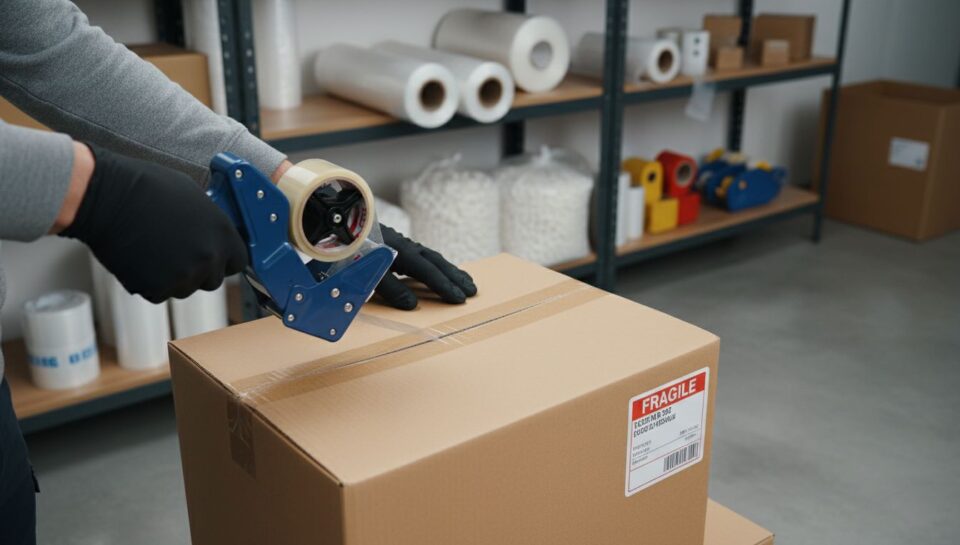

how to pack for international shipping is a question that determines whether your shipment arrives on time and within budget. This guide explains the process step-by-step, with practical tips from SGK Global’s 17+ years of Nigeria shipping experience.
The Ultimate Guide on How to Pack for International Shipping.
When shipping internationally, your items face a long and complex journey. Unlike a domestic delivery, your package will be handled by multiple carriers, cross oceans, and undergo rigorous customs inspections. A poorly packed box is the #1 cause of damage, customs delays, and costly surprises.
Simply “using a good box” isn’t enough.
As an IATA-certified logistics partner, we’ve seen why shipments fail—and how to ensure they succeed. This is our expert guide on how to pack for international shipping, whether you’re sending a small package by air or a full household by sea.
Why Proper Export Packing Isn’t Just a Suggestion
Proper packing is about three things: Safety, Compliance, and Cost.
-
Safety: Your shipment will be stacked, moved by forklifts, and subject to turbulence or ocean movement. Our professional export packing services are designed to protect your goods from breakage and moisture.
-
Compliance: A poorly labeled or incorrectly packed item (e.g., undeclared batteries) can be flagged by customs in Lagos. This can lead to your entire shipment being detained, inspected, and fined.
-
Cost: Airlines and shipping lines charge by volumetric weight (the space your box takes up), not just its actual weight. An oversized, half-empty box will cost you significantly more. Efficient packing saves you money.
The Right Tools: Packing Materials for International Shipping
Using the right materials is the most important first step. Do not reuse old or damaged boxes for international transit.
-
The Box: Use a new, double-walled or triple-walled corrugated cardboard box. A single-walled box (like a shoebox) will be crushed.
-
The Cushioning:
-
Bubble Wrap: Essential for wrapping individual fragile items.
-
Packing Peanuts / Air Pillows: Use these to fill all empty space in the box to prevent items from shifting.
-
Foam Inserts: Best for high-value electronics or delicate industrial parts.
-
-
The Tape: Use industrial-grade plastic packing tape (at least 2 inches wide). Do not use duct tape, masking tape, or standard office tape, as they will not hold.
How to Pack Your Box: A Step-by-Step Guide
-
Wrap Individual Items: Wrap all fragile items in bubble wrap and secure with tape.
-
Cushion the Bottom: Create a 2-3 inch layer of packing peanuts or crushed paper at the bottom of the box.
-
Pack: Center and Fill:
-
Place the heaviest items at the bottom.
-
Place your most fragile items in the center of the box, surrounded by other items.
-
Fill all empty spaces and voids with packing peanuts or air pillows. The box should be firm and nothing should move when you shake it.
-
-
Seal with the “H-Tape” Method:
-
Tape all the seams on the top and bottom of the box.
-
Then, apply tape across the middle seam and along the two side seams, forming a capital “H”. This provides the best structural support.
-
-
Label Clearly: Remove all old labels. Apply your new shipping label flat on the top of the box. Include a duplicate label inside the box in case the outside one is damaged.
The Professional Difference: Air vs. Sea Freight Packing
How you pack should change based on the service you’re using.
-
Packing for Air Freight: The main concerns are weight and durability. Use strong, lightweight materials (like double-walled cardboard) to keep volumetric weight down.
-
Packing for Sea Freight: This journey is longer and harsher. Your items will be exposed to humidity, moisture, and immense stacking pressure in a container. For furniture or large items, plastic wrap and moisture-absorbing desiccant packs are highly recommended.
When to Call for Professional Packing & Crating
While you can pack many items yourself, some require a professional. Our expert packing and crating service is essential for:
-
High-Value & Fragile Items: TVs, artwork, glass, and sensitive electronics.
-
Heavy or Awkwardly-Shaped Items: Industrial parts, machinery, or furniture.
-
Sea Freight & Household Moves: We build custom wooden crates (ISPM-15 certified for international use) to provide the ultimate protection for your high-value goods.
Don’t risk your most valuable items. Our Houston warehouse team can expertly pack or crate your goods for a guaranteed-safe journey.
The Bottom Line: Don’t Let Bad Packing Cost You
Proper packing is the most important investment you can make in your shipment. By following this guide, you can avoid the most common pitfalls. And for items that are too valuable or too complex to pack yourself, our team is here to help.
Get a Quote on Our Export Packing Services or call our logistics specialists at +1 (281) 501-2822.
For official regulations and current fees, refer to the U.S. Customs and Border Protection website.
Ready to Ship?
Get a free, no-obligation shipping quote from SGK Global. IATA-certified, FMC-licensed, and trusted by thousands of shippers since 2008.
Planning a shipment? Read the complete cargo to Nigeria guide from SGK Global — costs, transit times, documents, customs and delivery from the USA.