
LCL Shipping to Nigeria: The Complete 2026 Guide
LCL shipping to Nigeria is the most affordable way to import smaller cargo volumes — you share container space with other shippers and pay only for the cubic metres you use, not the entire container. SGK Global, an FMC-licensed NVOCC based in Houston, provides LCL consolidation (groupage) services from the USA, China, UK, and UAE to Lagos ports — with full customs clearance and door-to-door delivery included.
Table of Contents
- What Is LCL Shipping? (And Why It Matters for Nigeria Imports)
- LCL vs FCL: Which Should You Choose for Shipping to Nigeria?
- LCL Shipping Costs to Nigeria: 2026 Rate Guide
- LCL Transit Times to Nigeria by Origin
- Nigerian Ports That Accept LCL Shipments
- Step-by-Step: How LCL Shipping to Nigeria Works
- Required Documentation for LCL Imports into Nigeria
- Tips for a Smooth LCL Shipment to Nigeria
- Why Choose SGK Global for LCL Shipping to Nigeria?
- Frequently Asked Questions About LCL Shipping to Nigeria
What Is LCL Shipping? (And Why It Matters for Nigeria Imports)
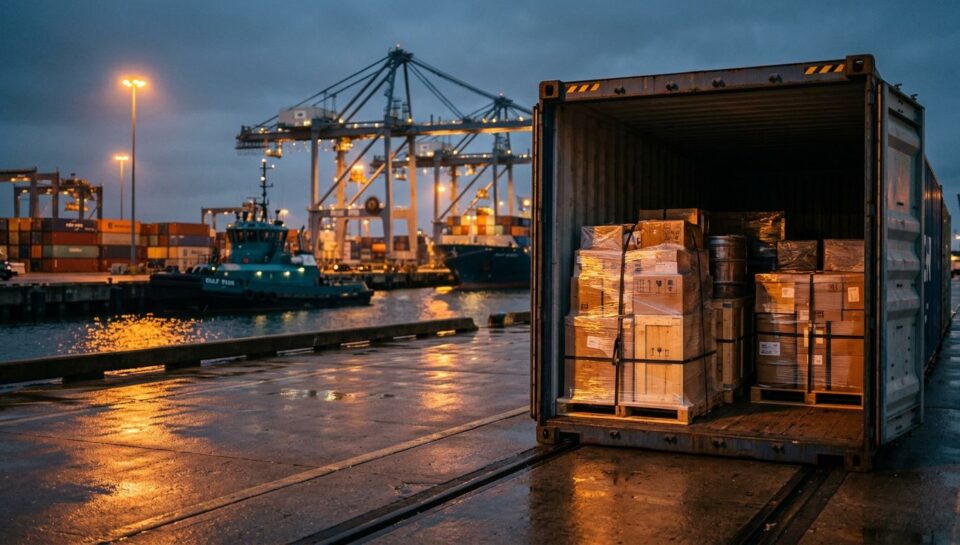
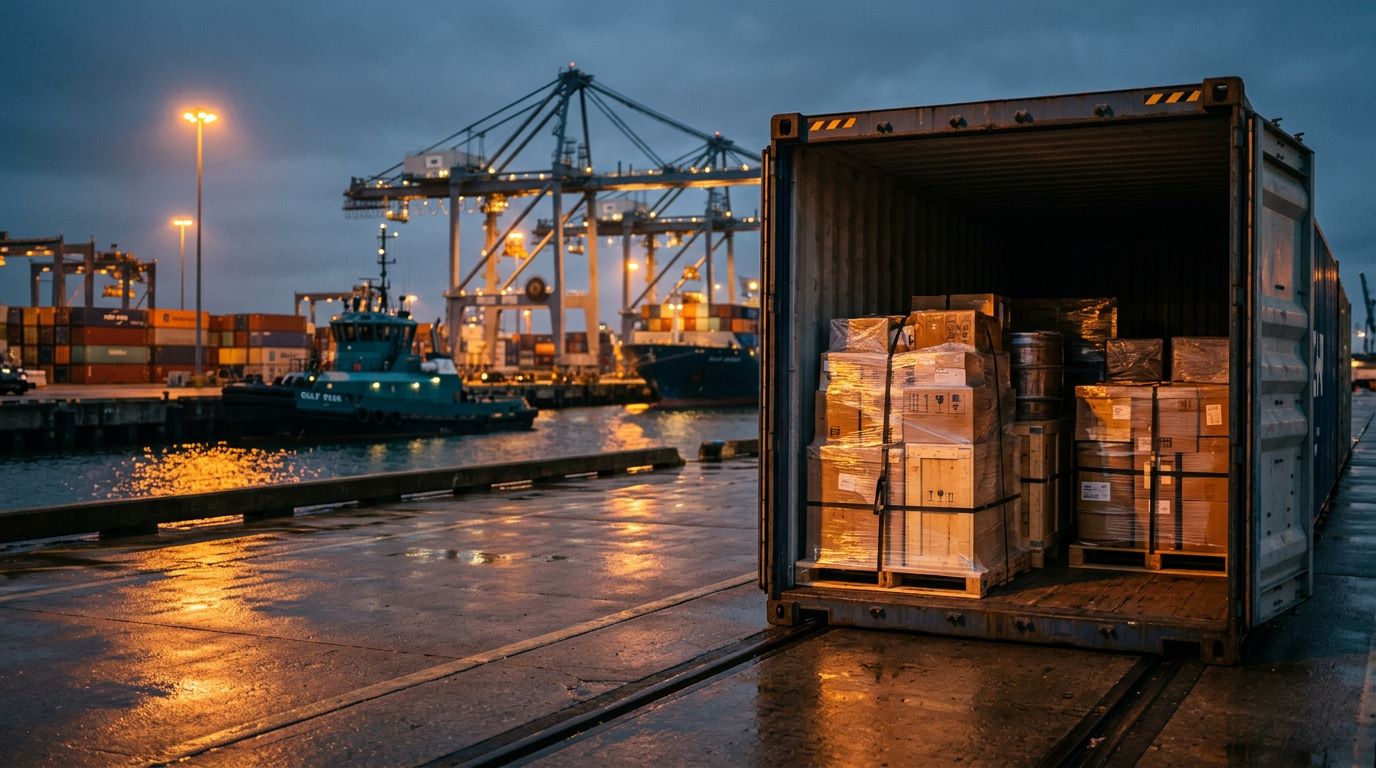
LCL shipping to Nigeria uses the Less than Container Load method — a type of ocean freight where your cargo shares space inside a shipping container with goods from other shippers heading to the same destination. Instead of paying for an entire 20ft or 40ft container, you pay only for the volume your cargo occupies, measured in cubic metres (CBM). This makes LCL the most cost-effective way to ship goods to Nigeria when you do not have enough volume to fill a full container — which, for most Nigerian SME importers, diaspora families, and e-commerce sellers, is the reality of every shipment.
Here is how LCL consolidation works in practice: you deliver your cargo (or your supplier does) to a Container Freight Station (CFS) near the port of origin. The freight forwarder — the NVOCC — consolidates your goods alongside other Nigeria-bound shipments into a single container. The container is sealed and shipped to Lagos, where it is deconsolidated at a CFS near Apapa or Tin Can Island. Your cargo is separated, cleared through Nigerian Customs, and delivered to your address or collected at the terminal. LCL is ideal for shipments under 15 CBM — above that threshold, FCL (Full Container Load) typically becomes more economical per cubic metre.
For Nigerian importers, LCL shipping matters because it removes the biggest barrier to ocean freight: the requirement to fill an entire container. Most small and medium-sized importers in Lagos, Onitsha, Abuja, and Kano simply do not generate enough cargo volume to justify FCL rates. LCL groupage democratises sea freight — you get the per-kilogram cost advantage of ocean shipping at whatever volume you ship, from one carton to several pallets.
LCL vs FCL: Which Should You Choose for Shipping to Nigeria?
The decision between LCL vs FCL for Nigeria-bound cargo comes down to volume, cost, and urgency. Both are reliable ocean freight methods — the right choice depends on your shipment size and your budget. Below is a direct comparison, followed by a clear recommendation for each scenario.
| Factor | LCL (Groupage) | FCL (Full Container) |
|---|---|---|
| Cost structure | Pay per CBM — no minimum volume | Pay for entire container, regardless of how full |
| Best volume range | Under 15 CBM | 15 CBM and above |
| Transit time | 5–10 days longer (consolidation adds time) | Faster — container ships on first available vessel |
| Security | Shared container — slightly higher handling risk | Sealed container — exclusive use |
| Flexibility | Ship any volume, any time | Must fill or near-fill the container |
| Nigeria port advantage | LCL avoids some Apapa congestion delays | FCL can face longer dwell times at congested terminals |
| Best for | SMEs, market traders, e-commerce, diaspora, samples | Bulk importers, manufacturers, high-volume traders |
Choose LCL When
- Your shipment is under 15 CBM
- You are a market trader or SME importing sample quantities
- You want to test a new product line without committing to a full container
- You ship regularly in small volumes and want per-shipment flexibility
- You are a diaspora family sending barrels and boxes home
Choose FCL When
- Your shipment exceeds 15 CBM
- You are shipping high-value goods that need sealed-container security
- Your cargo is time-sensitive and you need the fastest transit
- You import regularly in large volumes and can fill a container
- You need to pack personal items alongside commercial goods
LCL Shipping Costs to Nigeria: 2026 Rate Guide
LCL shipping to Nigeria costs are calculated based on CBM (cubic metres) or chargeable weight — whichever is greater. This is known as the W/M (weight or measure) rate, and it ensures that both bulky, lightweight cargo and dense, heavy cargo are priced fairly. Below are 2026 indicative base rates per CBM from the four most common origin regions, along with a breakdown of the surcharges and Nigeria-specific charges that make up the total landed cost.
These base rates cover ocean freight only. The total cost of LCL shipping to Nigeria includes several additional components that you should budget for:
- BAF (Bunker Adjustment Factor): A fuel surcharge that fluctuates with global oil prices — typically 10–15% of the base rate.
- PSS (Peak Season Surcharge): Applied during high-demand periods (October–January), quoted at booking.
- THC (Terminal Handling Charge): Origin and destination terminal fees — itemised in your all-inclusive quote at each end.
- Documentation fees: Bill of Lading issuance, Form M processing, PAAR filing — handled by SGK and itemised in your quote.
- Nigeria-specific charges: SON (Standards Organisation of Nigeria) levies, NAFDAC inspection fees (for food, drugs, cosmetics), NPA (Nigerian Ports Authority) surcharge, and CRFF terminal gate-out fee.
LCL Transit Times to Nigeria by Origin
LCL shipping to Nigeria takes longer than FCL from the same origin because of the consolidation and deconsolidation process. Your cargo must be received at the origin CFS, consolidated with other shipments, loaded into the container, and then — after arrival — deconsolidated at the Lagos CFS before customs clearance can begin. This adds approximately 5–10 days compared to an FCL shipment on the same route. Below are realistic door-to-CFS transit times for the four major origin regions.
| Origin | Port of Departure | LCL Transit to Lagos | FCL Transit (Comparison) |
|---|---|---|---|
| China | Shenzhen / Shanghai / Guangzhou | 45–55 days | 35–45 days |
| UK | Felixstowe / Southampton | 18–25 days | 14–20 days |
| USA | Houston / New York | 22–30 days | 18–25 days |
| UAE | Jebel Ali (Dubai) | 16–22 days | 12–18 days |
Important: The transit times above are ocean transit plus consolidation/deconsolidation. Lagos port clearance adds another 3–10 business days after the container arrives and is deconsolidated. Port congestion at Apapa — which has been a chronic challenge — can extend this further. SGK Global’s Lagos-based team monitors vessel arrivals and pre-files documentation to minimise clearance delays, but importers should always budget for the longer end of the range when planning inventory or deliveries.
Nigerian Ports That Accept LCL Shipments
LCL shipping to Nigeria arrives at Lagos-area ports, which handle over 80% of Nigeria’s seaborne imports. Understanding which port your cargo will use — and the differences between them — helps you plan your delivery timeline and budget. Below is a breakdown of the three main ports serving LCL traffic, plus the oil and gas specialty port at Onne.
Apapa Port (Lagos): Apapa is the primary LCL hub for West Africa and the busiest port in Nigeria. Most LCL groupage containers arriving from international origins discharge at Apapa’s multipurpose terminals. The port has established CFS facilities for deconsolidation, and SGK Global’s Lagos team is based here for a reason — Apapa handles the majority of our LCL clearance volume. The downside is congestion: Apapa’s access roads are notoriously slow, and during peak periods, container dwell times can exceed 14 days.
Tin Can Island Port (Lagos): Tin Can is the second major Lagos port and a viable alternative to Apapa for LCL shipments. It is generally less congested, with faster truck turnaround times on the port access roads. Some shipping lines route LCL containers to Tin Can specifically to avoid Apapa’s bottlenecks. If your cargo is routed to Tin Can, SGK’s team handles clearance there with the same process and documentation.
Lekki Deep Sea Port: Opened in 2023, Lekki is Nigeria’s newest and most modern port facility, with an annual capacity of 1.2 million TEUs. While Lekki is still scaling its LCL operations, it represents the future of container handling in Nigeria — deeper berths, automated systems, and significantly less congestion than Apapa. SGK is monitoring Lekki’s LCL capacity and will route shipments there as services mature.
Onne Port (Port Harcourt): Onne serves the oil and gas sector and handles specialised cargo, including oversized and project-related LCL shipments for the energy industry. If your cargo is oil and gas related and destined for Port Harcourt or the Niger Delta, Onne may be the recommended arrival port.
Step-by-Step: How LCL Shipping to Nigeria Works
LCL shipping to Nigeria follows a clear, managed process from your initial booking to final delivery in Lagos. SGK Global handles every stage — you deal with one team from start to finish. Here is exactly what happens.
- Book with SGK Global — submit your cargo details (volume, weight, commodity, origin, destination) through our quote form or call +1-281-501-2922. You receive a transparent, all-inclusive quote within 24 hours.
- Cargo pickup and delivery to origin CFS — deliver your cargo to the origin warehouse or CFS, or have SGK arrange pickup from your supplier. Our Houston warehouse is the primary US consolidation hub; we also coordinate with CFS partners in China, the UK, and the UAE.
- Consolidation and export clearance — your cargo is consolidated with other Nigeria-bound shipments in a single container at the origin CFS. Professional packaging and crating are available. Export customs clearance is completed at origin.
- Ocean transit — the consolidated container sails to Lagos. Transit time depends on origin (see the transit time table above). You can track your shipment online throughout the voyage.
- Arrival and Nigeria Customs inspection — the container arrives at Apapa, Tin Can, or Lekki. It is deconsolidated at the Lagos CFS. Our in-country team handles Form M, PAAR, duty assessment, and all Nigerian Customs Service formalities.
- Deconsolidation and final delivery — after customs clearance, your cargo is separated and released. Collect it at the CFS terminal, or SGK arranges delivery to your address in Lagos, Onitsha, Abuja, or any Nigerian city.
Required Documentation for LCL Imports into Nigeria
Incomplete documentation is the single biggest cause of delays at Lagos ports — and it is entirely preventable. Nigerian Customs requires specific documents for every LCL import, and missing even one item can hold your cargo for days. SGK Global’s documentation team handles the entire process, but you should know what is required so you can prepare in advance.
- Commercial Invoice and Packing List — itemised with HS codes, quantities, values, and weights. The packing list must match the commercial invoice exactly.
- House Bill of Lading (HBL) — issued by your freight forwarder (SGK Global). The HBL is the LCL equivalent of the Master Bill of Lading used for FCL shipments.
- Form M — the mandatory Nigerian import declaration form, filed with the Nigerian Customs Service before the cargo arrives. SGK files the Form M on your behalf as your clearing agent.
- PAAR (Pre-Arrival Assessment Report) — issued by Nigerian Customs based on the Form M, confirming the assessed duty and tax. SGK obtains the PAAR before the vessel arrives.
- NAFDAC certificate — required for food, drugs, cosmetics, and medical devices. If your cargo falls under NAFDAC jurisdiction, this certificate must be obtained before import.
- SON certificate — required for regulated products under the Standards Organisation of Nigeria’s conformity assessment programme.
- Combined Certificate of Value and Origin (CCVO) — certifies the origin and value of the goods for customs assessment.
Tips for a Smooth LCL Shipment to Nigeria
LCL shipping to Nigeria is straightforward when you work with an experienced forwarder — but a few practical tips can make the difference between a seamless delivery and a frustrating delay. These recommendations come directly from SGK Global’s operations team, based on thousands of Nigeria-bound LCL shipments.
- Palletise your cargo. Most truckers and CFS operators in Nigeria require cargo to be palletised for inland moves. Loose cartons are harder to handle and more likely to be damaged during deconsolidation. Standard pallet size is 120cm x 100cm or 120cm x 80cm.
- Use ISPM-15 compliant wood packaging. Nigeria, like most countries, requires wooden pallets and crates to be ISPM-15 treated and stamped. Non-compliant wood packaging will be flagged by Nigerian Customs and may require fumigation at your expense — or be refused entry entirely.
- Book 2–4 weeks early. LCL consolidation schedules are less frequent than FCL sailings. Booking early ensures your cargo makes the next available consolidation and secures more competitive rates — especially during peak season when space tightens.
- Consider all-in DDP pricing. DDP (Delivered Duty Paid) pricing includes everything — ocean freight, destination charges, customs duty, and delivery — in a single rate. This eliminates surprise charges at the Lagos port and makes budgeting predictable. SGK offers DDP pricing for LCL shipments to Nigeria.
- Work with a forwarder who has a Nigeria-based team. The most critical phase of any LCL shipment to Nigeria is not the ocean transit — it is the customs clearance and port release. A forwarder with in-country staff at Apapa and Tin Can can resolve documentation issues, interact with NCS directly, and expedite your cargo through the port. Forwarders without a local presence rely on third-party agents, which adds time and cost.
- Take out cargo insurance. Shared containers carry slightly higher handling risk than exclusive FCL containers — your goods are loaded and unloaded alongside other shippers’ cargo. Marine cargo insurance is inexpensive relative to the value of your goods, and SGK recommends it for every LCL shipment.
Why Choose SGK Global for LCL Shipping to Nigeria?
SGK Global is an FMC-licensed NVOCC — not a broker, not a middleman. We issue our own House Bills of Lading, we operate our own consolidation warehouse in Houston, and we maintain an in-country customs clearance team in Lagos. This means you deal with one company from booking to delivery, with no handoffs to unknown third parties at the destination port. Our ocean freight expertise extends across LCL, FCL, and air freight, so we can recommend the right method for your cargo rather than pushing the one we sell.
Our Houston, TX warehouse is the primary US consolidation hub for Nigeria-bound LCL cargo. If you are in the US, your goods are received, consolidated, and shipped from a single facility — no transfers, no multiple handling points. We also coordinate LCL consolidation from China, the UK, and the UAE through our network of CFS partners, with the same SGK-managed clearance process at the Lagos end.
SGK’s bonded warehouse in Onitsha gives us a unique advantage for inland delivery beyond Lagos. After customs clearance, we truck cargo directly to our Onitsha terminal — within reach of Onitsha Main Market, Nnewi, Awka, and Asaba. For traders and businesses in the Anambra commercial corridor, this eliminates the need to travel to Lagos to collect shipments. We also offer procurement services for importers who need help sourcing goods from US suppliers.
Frequently Asked Questions About LCL Shipping to Nigeria
Ready to Ship LCL to Nigeria?
Get a free LCL shipping quote in 24 hours — FMC-licensed NVOCC, consolidation from USA, China, UK, and UAE, full customs clearance at Lagos ports. All-inclusive pricing, no hidden fees.
Get a Free LCL Quote Or call +1-281-501-2922 for immediate assistanceFor official regulations and current fees, refer to the International Maritime Organization website.
Ready to Ship?
Get a free, no-obligation shipping quote from SGK Global. IATA-certified, FMC-licensed, and trusted by thousands of shippers since 2008.
Request Your Free QuotePlanning a shipment? Read the complete cargo to Nigeria guide from SGK Global — costs, transit times, documents, customs and delivery from the USA.