

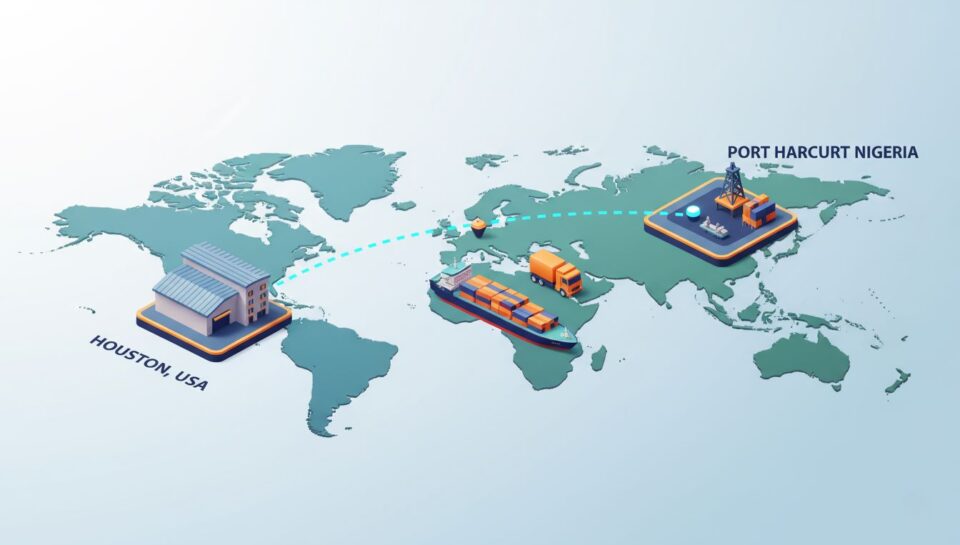

Oil and Gas Shipments: Critical Global Logistics
Expert freight forwarding for the energy sector. We manage heavy lift, hazardous cargo, and time-critical logistics to Nigeria, Africa, and the Middle East.
In the high-stakes energy sector, downtime is measured in millions of dollars. Managing complex oil and gas shipments requires more than just standard freight forwarding; it demands a partner who understands the intricacies of “Project Cargo,” rigorous safety standards, and the geopolitical landscape of regions like Nigeria and the Middle East.
From transporting massive turbine parts to Onne Port in Nigeria to delivering urgent drill bits to oil fields in Saudi Arabia, our comprehensive logistics services are tailored for the unique pressures of the upstream and downstream sectors. This guide explores how to optimize your supply chain for heavy machinery, hazardous materials, and time-sensitive equipment.
Project Cargo
Specialized handling for Out-of-Gauge (OOG) machinery, rigs, and heavy industrial equipment.
Hazmat Compliance
Certified handling of Class 1-9 dangerous goods, ensuring safety and full regulatory compliance.
Time-Critical
AOG (Aircraft on Ground) and urgent “Hot Shot” services to prevent costly rig shutdowns.
Challenges in Oil and Gas Shipments
Unlike general commercial goods, oil and gas shipments often involve irregular shapes, extreme weights, and hazardous components. Whether you are moving Christmas trees (subsea valves), riser pipes, or chemical catalysts, the margin for error is zero.
For destinations in Africa, particularly Nigeria, the challenge is compounded by local content laws and port specifics. Shipping to the Oil and Gas Free Zone at Onne Port, for example, offers significant duty advantages over Lagos ports, but requires precise documentation to qualify.
Modes of Transport for Energy Logistics
Selecting the right mode of transport is crucial for balancing cost against the urgency of the project lifecycle. To learn more about our specific transport modes, check our full list of services.
1. Air Charter Services
When a drill site is halted due to a missing part, air freight is the only option. We organize full or part-charter flights using heavy-lift aircraft (like the Antonov An-124) to transport oversized equipment directly to hubs like Port Harcourt (PHC), Lagos (LOS), or Dubai (DXB).
2. Ocean Freight & Breakbulk
For the movement of heavy rigs, pipe racks, and refinery modules, sea freight is the backbone of the industry. We utilize Flat Racks and Open Top containers for OOG cargo. For items too large for containers, our Breakbulk and RoRo services ensure safe transit to major energy ports.
Comparison: Oil and Gas Shipments Modes
| Transport Mode | Ideal Application | Transit to Nigeria | Weight Limit |
|---|---|---|---|
| Air Charter | Urgent Spares, Valves, Tools | 3 – 5 Days | Up to 150 Tons |
| Sea (Breakbulk) | Turbines, Generators, Rigs | 6 – 8 Weeks | Unlimited (Vessel dep.) |
| Sea (Container) | General Supply, Chemicals | 6 – 9 Weeks | ~28 Tons per TEU |
| Road Freight | Inter-regional (Lagos to Warri) | 2 – 4 Days | Limited by Road Safety |
Oil and Gas Shipments to Nigeria
For international energy companies, Nigeria remains a primary destination. Successfully managing oil and gas shipments here means understanding the ports.
Onne Port (Federal Ocean Terminal): Located in Rivers State, this is the dedicated hub for the Oil & Gas industry. It is an Oil & Gas Free Zone, allowing for duty-free importation of certain equipment intended for re-export or specific projects. It is the preferred gateway for cargo heading to Port Harcourt, Warri, and the Niger Delta.
Lagos Ports (Apapa/Tin Can): While these are the largest ports, they are often congested. They are best suited for commercial cargo or shipments destined for the South West or Northern Nigeria. However, expect longer clearance times compared to the specialized efficiency of Onne.
Essential Compliance & Documentation
The energy sector is heavily regulated. In Nigeria, the Nigerian Content Development and Monitoring Board (NCDMB) plays a massive role. Missing paperwork leads to demurrage and fines.
Expert Tip: Hazardous Cargo
Many chemicals used in drilling (mud additives, corrosion inhibitors) are classified as Dangerous Goods (DG). When booking oil and gas shipments, always declare the UN Number and Class immediately. Airlines and Shipping Lines have strict quotas for DG, and late declarations can result in your cargo being “bumped” to the next vessel.
Frequently Asked Questions
What is the fastest way to ship urgent oil tools to Port Harcourt?
Can you handle Dangerous Goods (DG) like explosives or chemicals?
Do I need a Form M for temporary equipment import (re-export)?
Why should I use Onne Port instead of Lagos for O&G cargo?
Power Your Supply Chain
Reliability is the only currency that matters in the energy sector. Get a competitive quote for your next oil and gas shipment today.
Request Logistics Quote