

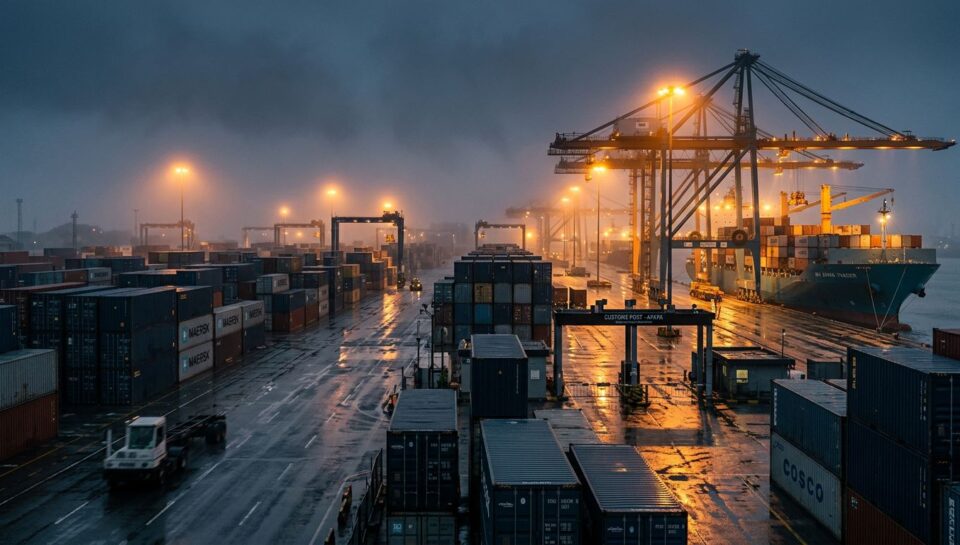

How Much Does It Cost to Ship to Nigeria? (2026 Complete Guide)
How much does it cost to ship to Nigeria? That depends on your shipping method, package weight, origin country, and whether you use an express courier, air freight, or sea freight. In general, shipping to Nigeria costs anywhere from $30 for a small USPS parcel to over $3,500 for a full 20ft container by sea. This guide from SGK Global breaks down every option — express courier rates, air freight per kilogram, sea freight LCL and FCL pricing, Nigerian customs duties, and cost-saving strategies — so you can make an informed decision before you ship.
Quick Summary — Shipping Costs to Nigeria at a Glance
Before diving into the details, here is a quick-reference table that answers the question “how much does it cost to ship to Nigeria” for each major shipping method. All rates are estimates based on April 2026 market data and are subject to fuel surcharges, seasonal demand, and carrier-specific fees.
| Shipping Method | Estimated Cost | Transit Time | Best For |
|---|---|---|---|
| Express Courier (DHL/FedEx/UPS) | $30–$200+ (0–2 kg) $200–$1,200 (heavy parcels) |
1–5 business days | Documents, small parcels, urgent goods |
| USPS (from USA) | ~$30–$80 (small, light) | 7–21 days | Budget parcels under 2 lbs |
| Air Freight | $5–$11 per kg (inbound) | 5–10 business days | 30–500 kg commercial shipments |
| Sea Freight — LCL | $85–$150 per CBM | 4–8 weeks | Bulky cargo under 15 CBM |
| Sea Freight — FCL (20ft) | $1,500–$3,500 | 4–6 weeks | Bulk commercial imports |
| Sea Freight — FCL (40ft) | $2,500–$5,500 | 4–6 weeks | Large-volume commercial imports |
Factors That Affect the Cost of Shipping to Nigeria
When people ask how much does it cost to ship to Nigeria, the answer always begins with “it depends” — because the final cost is determined by a combination of variables that differ for every shipment. Understanding these factors helps you estimate your costs more accurately and identify where savings are possible.
Weight and dimensions: Carriers charge based on actual weight or volumetric (dimensional) weight — whichever is greater. Volumetric weight is calculated as Length x Width x Height (in cm) divided by 5,000 for express couriers. This means a large, lightweight package (like a box of pillows) may cost more to ship than a small, dense package of the same weight. For air and sea freight, volumetric weight formulas differ, but the principle is the same: size matters as much as weight.
Shipping method: Express courier is the fastest and most expensive option, ideal for documents and small parcels under 30 kg. Air freight is the middle ground for commercial cargo between 30 and 500 kg. Sea freight is the cheapest per-unit option for bulk shipments but takes the longest. The method you choose is the single biggest factor in determining how much it costs to ship to Nigeria.
Origin country: Shipping from the USA to Nigeria follows well-established Gulf Coast routes from Houston, with frequent sailings and competitive rates. Shipping from the UK, China, or the UAE follows different trade lanes with different carrier availability, transit times, and pricing. China-to-Nigeria sea freight is among the cheapest per CBM due to high trade volume on that route.
Carrier selection: DHL, FedEx, and UPS each have different base rates, fuel surcharges, and remote area delivery fees for Nigeria. DHL generally has the broadest Nigerian delivery network and the most competitive express rates. USPS is cheapest for small parcels but offers limited tracking once the package enters the Nigerian postal system.
Declared value and customs duties: Nigerian Customs assesses duty on the CIF value (Cost + Insurance + Freight), which means your freight cost is included in the dutiable value. Higher freight costs result in slightly higher duty assessments. Declaring an artificially low value is risky — Nigerian Customs can revalue your goods and impose penalties, which ends up costing far more than honest declaration.
Shipping to Nigeria: Express Courier Rates (DHL, FedEx, UPS, USPS)
For anyone wondering how much does it cost to ship to Nigeria using express couriers, the answer depends on the carrier, the service tier, and the weight of your package. Express couriers are the right choice when speed matters — documents, small parcels, time-sensitive business materials, and gifts. Below is a carrier-by-carrier breakdown of rates and transit times.
DHL Shipping to Nigeria — Rates & Transit Times
DHL Express is the market leader for express parcel delivery to Nigeria, with the most extensive in-country delivery network and the fastest transit times from the US, UK, and Europe. DHL Express Worldwide delivers to Lagos, Abuja, and Port Harcourt in 1–3 business days from the US, while DHL Express Economy offers a more affordable option with 3–5 day delivery. For a 1 kg parcel from the US, DHL Express Worldwide costs approximately $50–$120; for a 5 kg parcel, expect $120–$250. Heavier shipments above 30 kg are typically cheaper per kilogram but may qualify for DHL Freight rates rather than express parcel rates.
DHL’s advantages for Nigeria include real-time tracking all the way to delivery, customs clearance assistance built into the service, and a physical presence in all major Nigerian cities. The downside is that fuel surcharges (typically 20–30% of the base rate) and remote area surcharges can push the final cost well above the quoted price.
FedEx Shipping to Nigeria — Rates & Transit Times
FedEx International Priority is the fastest option for shipping to Nigeria, with 1–3 business day delivery from the US. FedEx International Economy offers 3–5 day delivery at a lower rate. For a 1 kg parcel from the US, FedEx International Priority costs approximately $60–$140. For a 5 kg parcel, rates range from $150–$300. FedEx is generally slightly more expensive than DHL for Nigeria, but International Priority is competitive when absolute speed is the priority. Note that FedEx applies fuel surcharges and may charge additional remote area delivery fees for destinations outside Lagos and Abuja.
UPS Shipping to Nigeria
UPS Worldwide Express and UPS Worldwide Expedited serve Nigeria with reliable transit times (1–3 days and 3–5 days respectively). UPS tends to be the most expensive of the big three express carriers for Nigeria, with a 1 kg parcel from the US costing approximately $70–$160. However, UPS offers excellent last-mile tracking and is popular with business shippers who need detailed delivery confirmation and customs documentation support.
USPS Shipping to Nigeria — Cheapest Small Parcel Option
If you are looking for the cheapest way to ship to Nigeria and your package is small and light (under 2 lbs / 1 kg), USPS Priority Mail International is the most affordable option at approximately $30–$80. USPS Flat Rate boxes are particularly cost-effective — if your items fit in a Flat Rate box, you pay a fixed rate regardless of weight (up to 70 lbs). However, USPS shipping to Nigeria comes with significant limitations: tracking is limited once the package enters the Nigerian postal system, delivery confirmation is unreliable, and transit times range from 7–21 business days with no guaranteed delivery date. For valuable or time-sensitive items, a private courier is worth the extra cost.
| Carrier | 1 kg Parcel (Est.) | 5 kg Parcel (Est.) | Transit Time | Tracking |
|---|---|---|---|---|
| DHL Express | $50–$120 | $120–$250 | 1–3 days | Full door-to-door |
| FedEx Intl Priority | $60–$140 | $150–$300 | 1–3 days | Full door-to-door |
| UPS Worldwide | $70–$160 | $160–$350 | 1–5 days | Full door-to-door |
| USPS Priority | $30–$80 | $80–$180 | 7–21 days | Limited in Nigeria |
Air Freight to Nigeria — Rates Per Kilogram (2026)
When your shipment exceeds the weight limit for express courier (typically 30–70 kg per parcel) but is not large enough to fill a sea freight container, air freight is the solution. Current inbound air freight rates to Nigeria range from $5–$11 per kilogram depending on the origin, commodity, volume, and seasonal demand. Air freight to Nigeria is calculated based on chargeable weight — the greater of actual gross weight or volumetric weight — so the same dimensional weight rules that apply to express couriers apply here.
Air freight is the right choice for commercial shipments in the 30–500 kg range where delivery speed matters. Typical transit time from the US to Lagos (Murtala Muhammed International Airport) is 3–5 business days for the flight, with an additional 2–5 business days for customs clearance and delivery. From the UK, air freight to Nigeria takes 2–4 days flight time; from China or the UAE, 3–6 days. The key advantage of air freight over express courier for heavier shipments is cost: while DHL might charge $300–$500 for a 20 kg parcel, air freight for the same weight might cost $100–$220 — a significant saving.
SGK Global operates as an IATA-certified air freight agent, which means we have direct access to airline booking systems and can secure space on flights even during peak seasons. We handle all export documentation from the US and coordinate customs clearance on the Nigeria side, including PAAR pre-assessment and duty payment.
Sea Freight to Nigeria — Container & LCL Rates
Sea freight is the backbone of commercial shipping to Nigeria, and it is the method that most drastically affects how much does it cost to ship to Nigeria when you are moving large volumes of goods. Ocean freight is the cheapest per-unit shipping method by far, but it requires patience — transit times from the US and UK run 4–6 weeks, and from China approximately 4–8 weeks. Sea freight to Nigeria operates in two modes: LCL (Less-than-Container Load) for smaller shipments that share container space with other cargo, and FCL (Full Container Load) for shipments large enough to fill an entire container.
LCL Sea Freight to Nigeria
LCL sea freight is the cheapest way to ship to Nigeria for bulky commercial cargo that does not fill a full container. Current LCL rates to Nigeria run approximately $85–$150 per cubic metre (CBM) from the US, depending on the origin port, commodity type, and destination terminal in Lagos. SGK Global’s Houston consolidation warehouse receives cargo from any US address, and we pack your goods into shared containers with other Nigeria-bound shipments. You pay only for the cubic metres or weight you actually use. LCL is the right choice for shipments under approximately 15 CBM — above that threshold, a full container (FCL) is typically more economical.
FCL Sea Freight to Nigeria
Full container shipping to Nigeria comes in two sizes: 20ft containers (approximately 33 CBM capacity) and 40ft containers (approximately 67 CBM capacity). From Houston to Lagos, a 20ft FCL container costs approximately $3,500–$5,500, and a 40ft container ranges from $5,500–$8,500, depending on the shipping line, fuel surcharges, and seasonal demand. From China to Lagos, rates are typically lower — $1,500–$3,500 for a 20ft container and $2,500–$5,500 for a 40ft container — due to the high volume of China-to-Nigeria trade. SGK Global operates as an FMC-licensed ocean freight NVOCC, which means we issue our own bills of lading and control the entire shipping chain from Houston to Lagos.
LCL (Less-than-Container Load)
Cost: $85–$150 per CBM from the US
Transit: 30–45 days door-to-door
Ideal for: Small importers, diaspora shippers, mixed cargo, personal effects, barrels and boxes
FCL (Full Container Load)
Cost: $3,500–$8,500 per container from the US
Transit: 30–45 days door-to-door
Ideal for: Bulk importers, vehicle shippers, industrial equipment, building materials
Nigeria Customs Duties & Import Taxes
One of the most underestimated factors when people research how much does it cost to ship to Nigeria is the customs duty and import tax bill that awaits their goods at the Nigerian port. Freight quotes from carriers and forwarders cover only the transport cost — they do not include the duties, taxes, and levies imposed by the Nigerian government on imported goods. These charges can add 20% to 60%+ to your total landed cost, depending on what you are importing.
Nigeria uses the CIF (Cost, Insurance, and Freight) valuation method, meaning customs duty is assessed on the total value of your goods including the shipping cost and insurance — not just the purchase price. The base import duty rate ranges from 5% to 35% depending on the HS code classification under the ECOWAS Common External Tariff. On top of the base duty, the following statutory charges apply to virtually all commercial imports:
| Charge | Rate | Calculated On |
|---|---|---|
| Import Duty | 5%–35% (varies by HS code) | CIF Value |
| Surcharge | 7% | Import Duty amount |
| FCS (Financing Customs Services) | 4% | FOB Value |
| ETLS (ECOWAS Trade Liberalisation Scheme) | 0.5% | FOB Value |
| VAT | 7.5% | CIF + Duty + Surcharge + FCS + ETLS |
For vehicles, an additional National Automotive Council (NAC) levy applies: 15% on used vehicles and 20% on new vehicles, calculated on the CIF value on top of the 20% import duty. This means a used car imported into Nigeria faces an effective duty burden of approximately 35% of CIF value before surcharge, FCS, ETLS, and VAT are even added — pushing the total customs charge to roughly 60%+ of the vehicle’s CIF value.
Shipping to Nigeria From Different Countries — Cost Comparison
The cost to ship to Nigeria varies significantly depending on which country you are shipping from. Trade lane volume, carrier availability, and distance all affect pricing. Below is a comparison of estimated express courier and sea freight costs from four major origin countries to Nigeria.
| Origin Country | Express Courier (1 kg) | Sea Freight LCL (per CBM) | Sea Freight FCL (20ft) | Transit (Sea) |
|---|---|---|---|---|
| USA (Houston) | $50–$120 | $85–$150 | $3,500–$5,500 | 4–6 weeks |
| UK (London) | $45–$100 | $70–$130 | $3,000–$5,000 | 3–5 weeks |
| China (Guangzhou) | $40–$90 | $50–$100 | $1,500–$3,500 | 4–8 weeks |
| UAE (Dubai) | $45–$100 | $60–$120 | $2,000–$4,000 | 3–5 weeks |
SGK Global specialises in shipping from the USA to Nigeria, operating from our Houston Gulf Coast consolidation hub. If you are shipping from the US, our warehouse receives your cargo from any US address or supplier, and we handle the entire chain — packaging and crating, ocean or air booking, export documentation, Nigerian customs clearance, and door-to-door delivery to any city in Nigeria.
How to Reduce Your Shipping Costs to Nigeria
Now that you have a clear picture of how much does it cost to ship to Nigeria across different methods and carriers, here are proven strategies to reduce your shipping expenses without sacrificing reliability or speed.
- Consolidate your shipments — instead of shipping multiple small parcels separately, combine them into one larger shipment. SGK Global’s Houston consolidation warehouse is designed for exactly this. A single 50 kg air freight shipment costs significantly less per kilogram than five 10 kg express courier parcels.
- Use a freight forwarder instead of booking directly with carriers — freight forwarders like SGK Global have negotiated volume rates with shipping lines and airlines that are lower than the retail rates available to individual shippers. We pass these savings on to you.
- Choose sea freight over air when time permits — sea freight is 60–80% cheaper than air freight per unit. If your goods are not time-sensitive, the 4–6 week transit time is well worth the savings. Plan ahead and ship early.
- Declare your goods correctly — under-declaring the value of your shipment to reduce customs duty is illegal and counterproductive. Nigerian Customs can revalue your goods, impose penalties of up to 100% of the evaded duty, and seize the shipment. Honest declaration avoids these risks and surprisingly may cost less than the penalties.
- Use LCL for smaller commercial shipments — if you do not fill a full container, LCL (Less-than-Container Load) lets you share container space and pay only for the volume you use. SGK Global’s weekly LCL consolidation sailings from Houston keep costs predictable.
- Plan around peak seasons — shipping rates spike during Q4 (October–December) due to holiday demand and end-of-year restocking. If possible, ship during Q1 or Q2 when rates are 10–20% lower and vessel space is more available.
- Let SGK Global handle customs clearance — delays at Nigerian ports result in demurrage charges that can exceed $100 per container per day. Our in-country clearance team processes your cargo daily, minimising port dwell time and protecting you from avoidable charges.
Frequently Asked Questions About Shipping to Nigeria
Ready to Ship to Nigeria? Get an All-Inclusive Quote
Stop guessing how much it costs to ship to Nigeria. SGK Global provides complete, all-inclusive quotes covering freight, customs clearance, and door-to-door delivery to any city in Nigeria — no hidden fees, no surprises.
Request a Free Quote Or call us: +1-281-501-2922 | Track Your Shipment | Register with Us